Worlds Remain. A RawData Studio game.
Pbuild is a first-person game about building planets and exploring them. You are one of the Vaelin, a people of wanderers, and you wake aboard a Forgehold, a vast worldship left behind by the vanished Anvari, at the edge of a stilled system. The ship has nearly everything needed to make a world. Making one is easy. What that world becomes depends on real physics, and then you fly down and explore it.
- 00 Design
- 01 Foundations
- 02 The Forge
- 03 Worlds Seen From Space
- 04 One People, Many Stars
- 05 The Mood Pass
- 06 Foundations for Play
- 07 Tending Seeds
- 08 Waking Last Lantern
- 09 Together
- 10 Worlds You Can Walk
- 11 Living Worlds
- 12 The Spiral's Story
00 Design Complete 3/3
- Game concept, lore, and the Vaelin's star system (four peoples until Session #46; now one, the Vaelin)
- Technical design: how a galaxy-sized world stays precise down to the millimetre
- Brand direction from the design boards
01 Foundations Complete 25/25
- Foundations: the simulation core (orbits, planet physics) and the first playable scene
- Hands-on playtest of the foundations (fixes made; replay to confirm)
- The look: the cloaked Wright in third person and the Vaelin Forgehold at final quality
- The Wright dressed and moving: clothes, animations, cloth, sound and sky
- Ashvek speaks, the cloak and sprint polished, recorded sound and a clearer sky
- Under the hood: one system for everything placed in the world, described as data (the Cradle is built this way already)
- Last Lantern brighter, with its walls sealed against space
- Under the hood: one system for characters: the Wright is described as data and brought into the world by it, so more characters can follow
- A brightness setting, so the ship can be lit the way you want it
- Room to stand beside the pod as you wake, instead of half inside it
- Under the hood: one system for sound, so every noise aboard is described the same way and played from one place
- The ship lit at the brightness chosen in play, and three sounds nothing ever played taken out
- The cloak resting properly on the pod as you wake, and solid things everywhere now push cloth away
- The cloak fully clear of the stone through the whole waking, and the Wright jumping properly out of a long stand
- Landing at a run without dropping into a crouch, so jumping off the pod and running on looks like one movement
- Under the hood: the ship's rooms described as data, written down once instead of twice — and a test that fires rays at every wall to prove no room can open onto space again
- Under the hood: the ship's rooms built from that one description, so the plain and finished versions of a room can never disagree about where a wall is
- Feet that touch down with the body when you land, and walls that stop the cloak the way the pod does
- A Wright who stops at walls instead of running through them, a body that stays out of walls and banners, and a first emote, the wave
- The Wright dances: a lambada and a salsa, motion-captured
- A dance of our own: a cumbia sonidera made from those two captures, with cumbia's back step, a full turn and a hand raised to the sonidero, flowing into the salsa and back
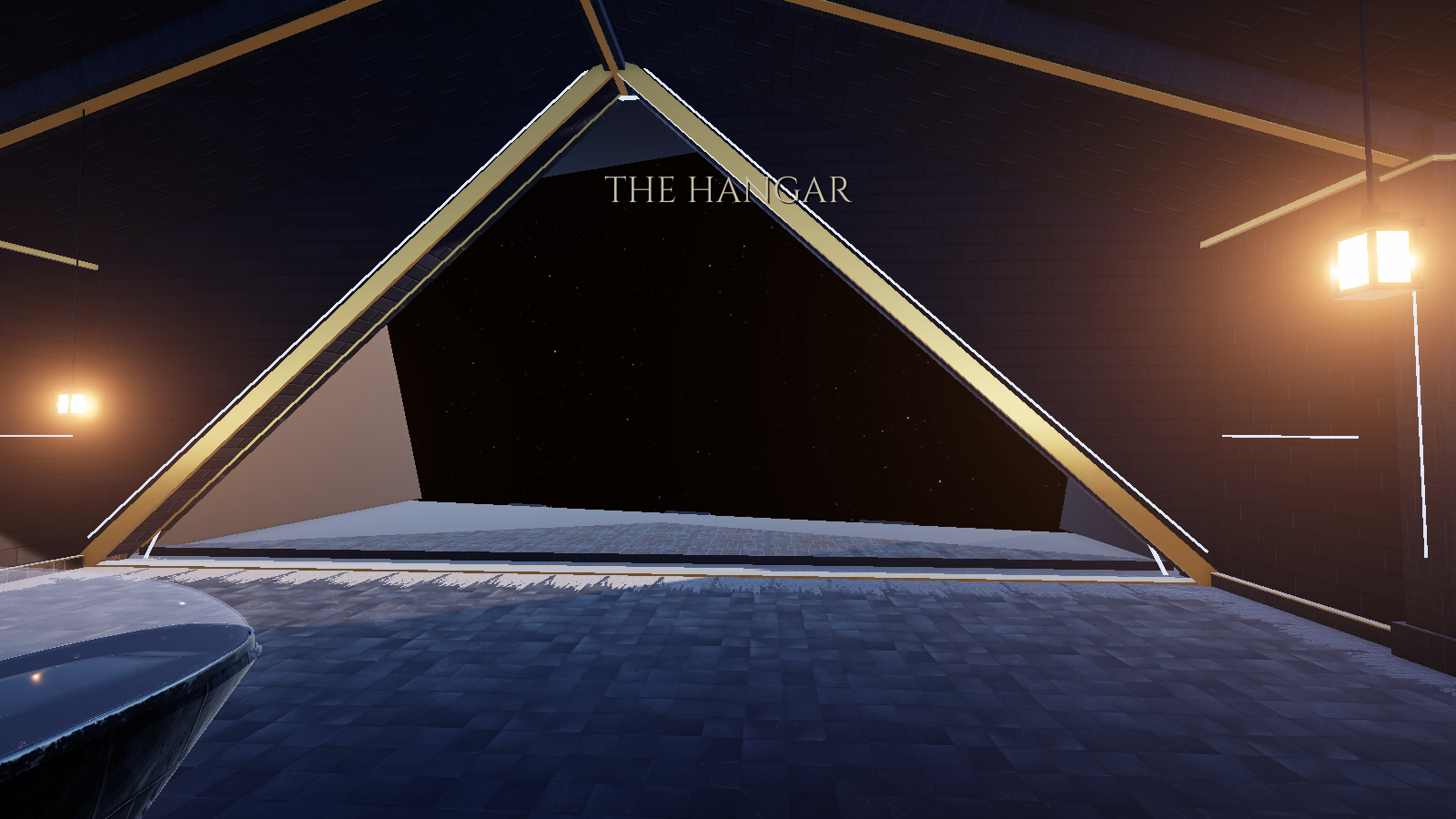
- The Hangar dressed, with Elizabeth, the Vaelin's own patched ship
- Any ship described as data, and flying earned rather than given
- A cockpit in Elizabeth to sit in and look around, and the dances looping without a jump
- Elizabeth flying properly: walls and roof that stop her, legs that fold away, a Hangar that lands her when she comes home, and her name on her hull
02 The Forge Complete 13/13
- The Forge's console standing in the Forge Chamber, ready to work, and landings at a run that flow straight back into the run
- No more sliding in a crouch after a big jump, banners you can't walk through, and a console that's easy to use
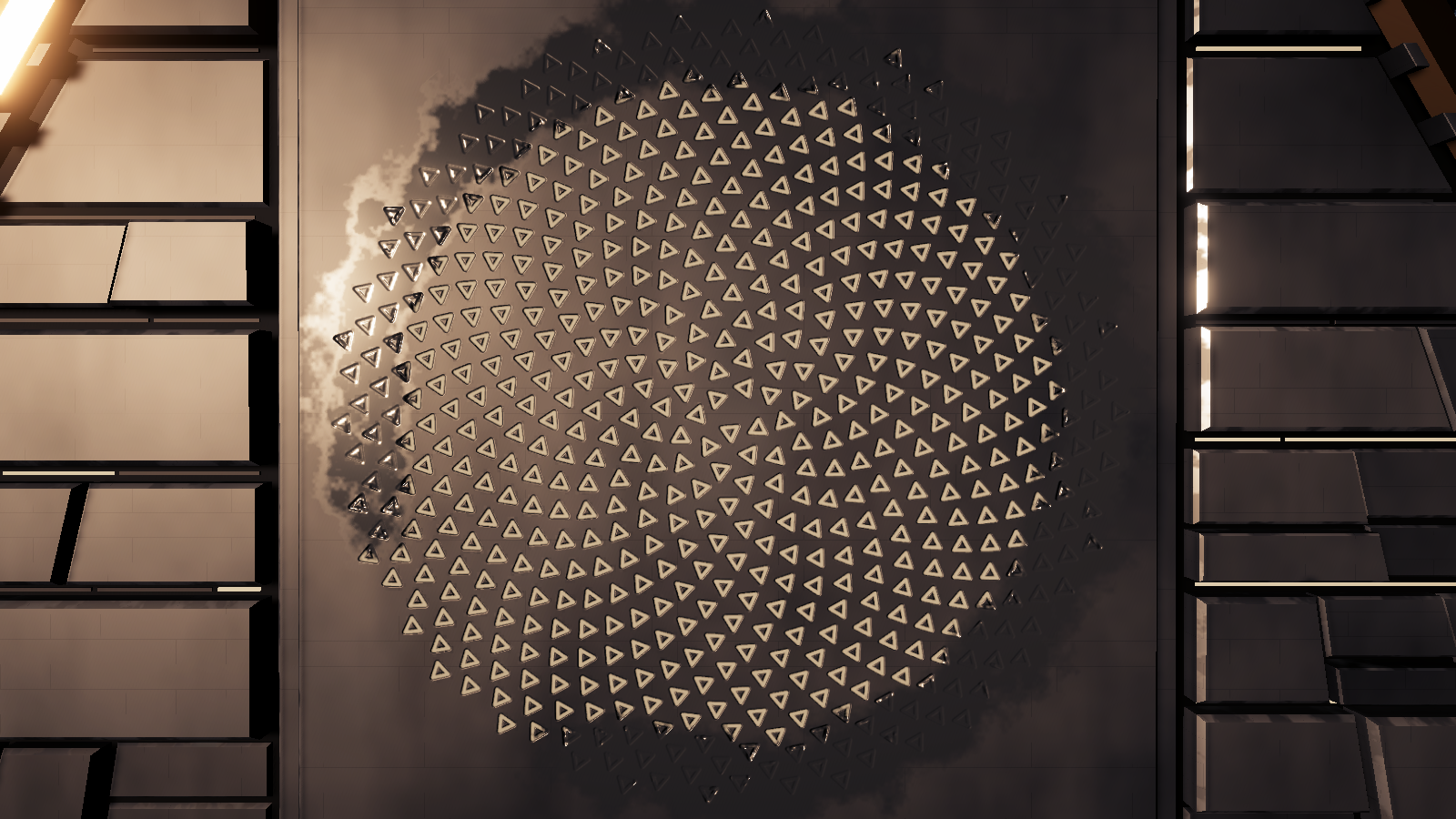
- The Forge Chamber dressed in the Anvari's sacred geometry: every figure a true diagram of life and physics
- Under the hood: a world described one way, whoever writes it, with its brightness following from its ice, oceans and clouds (Earth, Venus and Mars come out right)
- Under the hood: saves that come back exactly, say what is wrong when damaged, and survive a crash mid-save
- Under the hood: every world runs through its first billion years and is judged: does it remain, is it slipping, or has it failed, and why (Earth, Venus and Mars come out as they did)
- The Forge in greybox: write a world at the console, see its physics live and a picture of it on the hologram, speak it and learn whether it remains and why; games save and continue
- The shape of a world: land, sea floor and mountains from its seed, as much land at each height as Earth or Venus has, seas filled from its water and ice on its poles and heights
- The Forge answers: a green glow for a world that rhymes, a rite through the whole ship when one is spoken, the Hall of Time and names for every place; the doorway flicker and the crack under the doors fixed
- Watch a world live its first thousand million years on the Forge's hologram, and read the answer off it
- What the Forge remembers: Elizabeth, the Wright before you, seen once at the console
- See the world you spoke out there on its orbit, from the Observatory, and hear your Warden name it
- The Forgehold lets go of the stilled world it was left watching and crosses to the one you made, which then fills the Observatory
03 Worlds Seen From Space Complete 9/9
- The world you made has a face: coasts, ranges, seas, ice and cloud drawn from its own physics, lit by its own star with a terminator across it
- Cloud over it as weather of its own, and an air that scatters its star's light by the gases you gave it: a blue limb and a twilight arc, or a bright veil
- The world turns: once in the day you gave it, about the pole you tilted, with the star glinting off its seas and its cloud drifting over its coasts; the ship's clock runs at a pace you can set
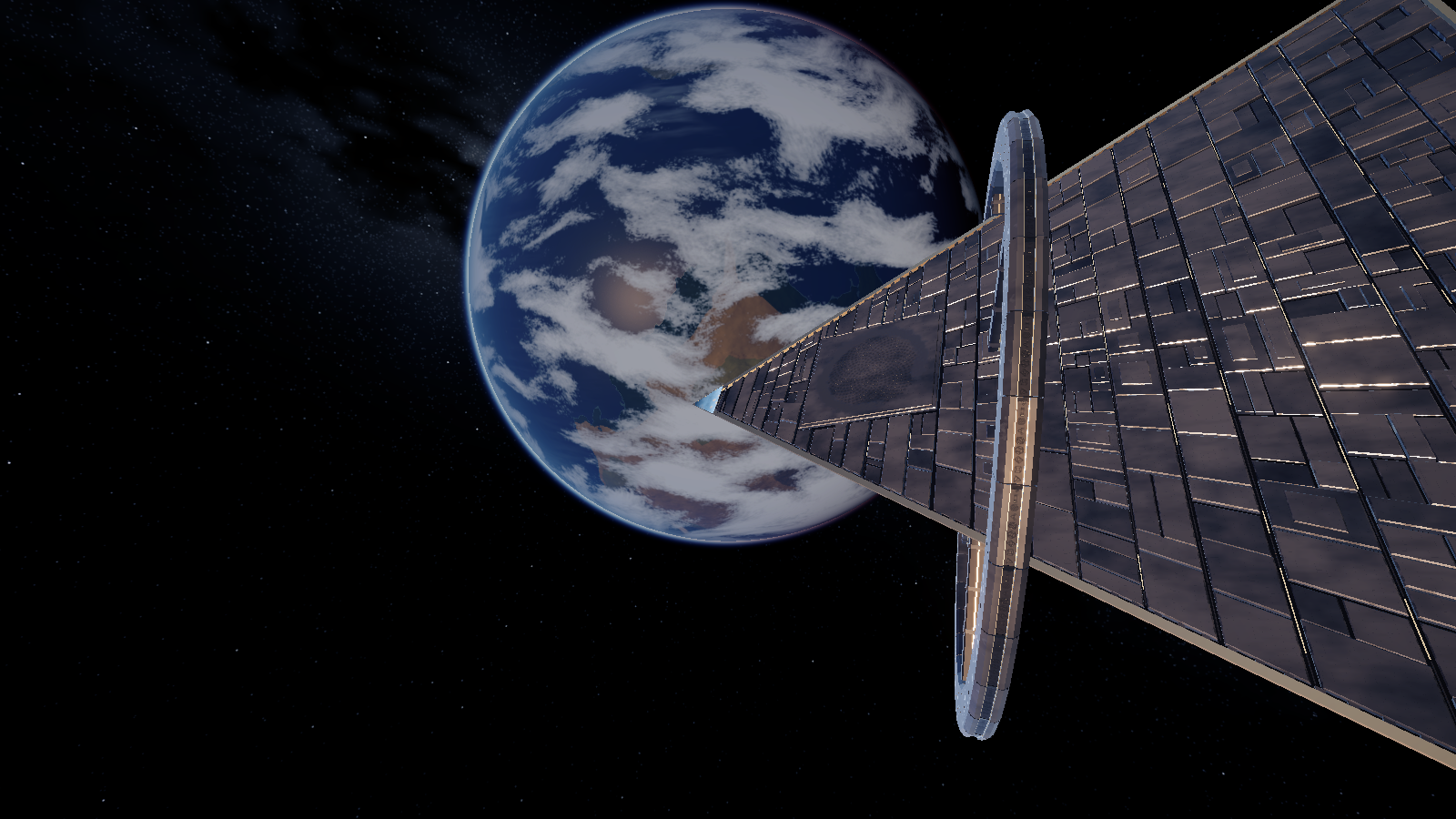
- The ship stands sunward of your world, so you see nearly all of its lit face instead of a thin crescent, with the star high behind you over the Observatory's open roof
- The ship stands near enough that your world fills the Observatory's open side, and you can ask your Warden at the sill to bring it nearer still, until the world stands across half the sky, and to stand off again
- The star is a star, with a corona and a glare, over a sky of stars that never twinkle; the cloud over your world is lit and shaped by the Space Graphics Toolkit; the day passes in five minutes so the turn can be seen; a crossing is felt through the camera
- Your world wears what grows on it: forests, grasslands, savanna and deserts where its rain and warmth put them, tundra and bare rock in the cold, all from its own climate, and only on a world that rhymes; the Space Graphics Toolkit draws its ground, its seas with the star glinting in them and its air by the numbers the physics gives
- Weather that looks like weather: cyclones winding along the storm tracks, hurricanes with a clear eye, cloud streaming along the winds and cirrus veils, all from the world's own seed; an air that glows round the limb; ground detailed by what covers it, pack ice at the frozen sea's edge and a sunglint as broad as a real sea's
- Steadier play: stepping up to the Forge's console without a stall, landings at a run that flow into the run at any frame rate, and a world's picture that arrives without a hitch
04 One People, Many Stars Complete 2/2
- Your world from every side: ask the Warden for a turn round it, through its night and its shadow
- Many worlds, each under a star of its own, and a list on the console that takes the ship between them
05 The Mood Pass Complete 12/12
- Play fullscreen, in a borderless window or in a window, and the game remembers which
- A night sky made of real stars: the Milky Way as tens of thousands of them, dark dust lanes through it, a few bright stars that catch the eye, and black space between
- Elizabeth stays where the Hangar lands her: powered down on her berth until you hold R to wake her, and always left on the Delta when you step out
- Continuing a game, the ship comes into view already whole: the sky and your world outside are ready before the view comes up, and the game paints worlds and weather much faster
- The Forge's hologram keeps up: a world you speak or travel to is already painted when you arrive, the hologram shows the world where the ship is, and a seed you try but don't speak is put away when you step back
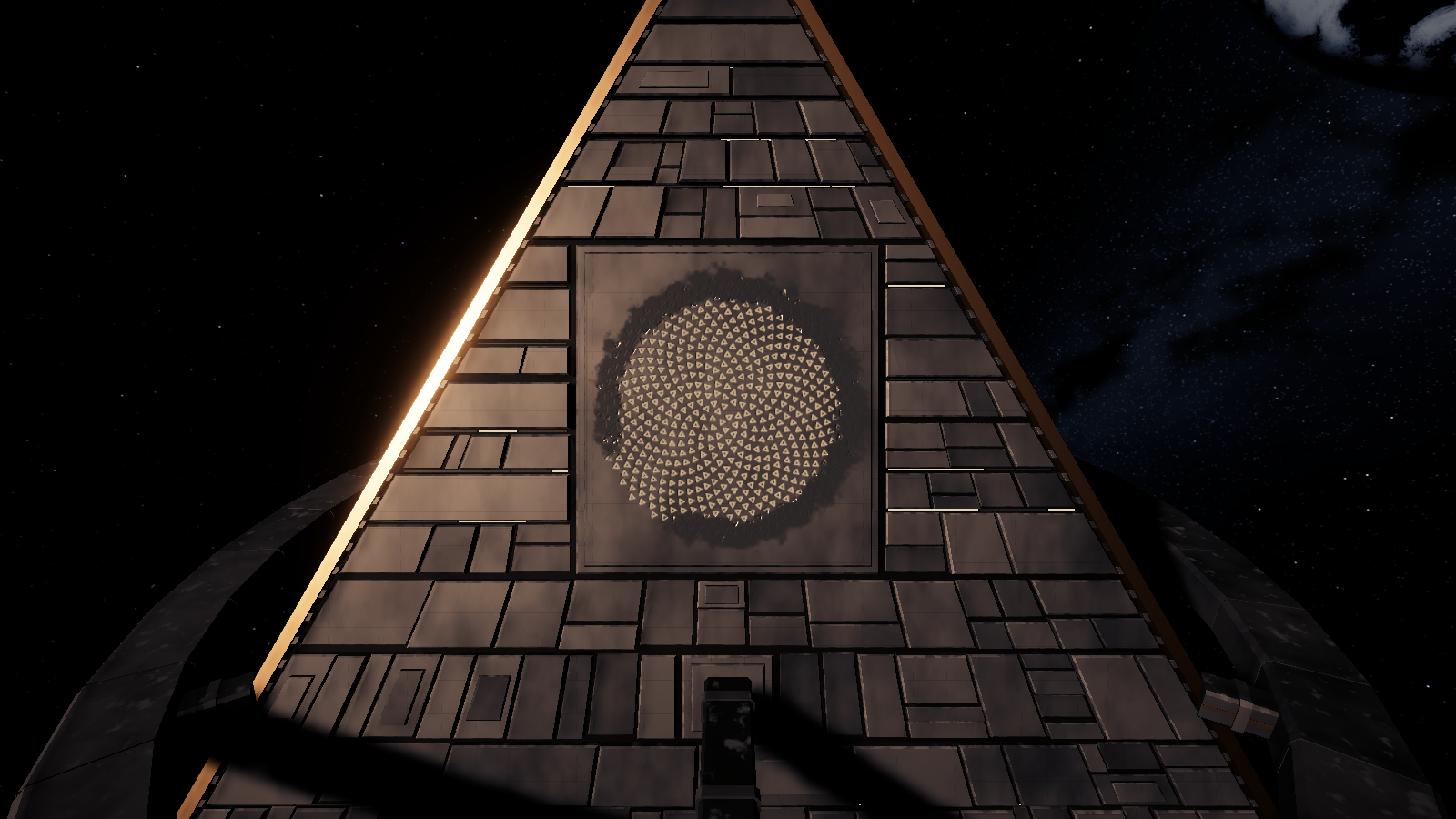
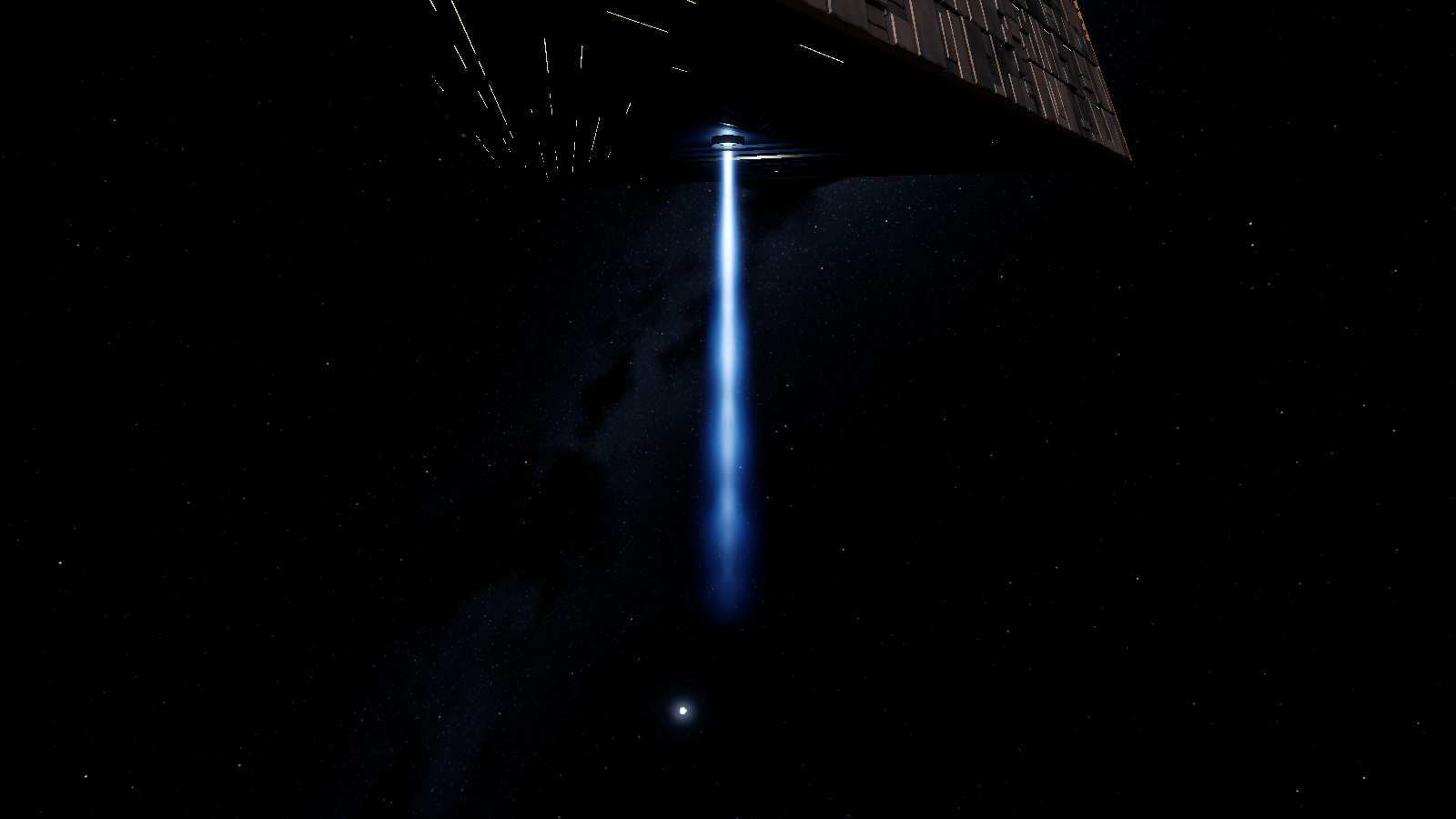
- Last Lantern seen from outside as a ship: a pyramid of plated stone 3 km tall with a ring round its waist, a lantern of light at its tip, warm light running in its seams and ancient figures of how life begins cut into its faces
- The ship's halls set into its stone: fly home to a lit Hangar mouth cut in the face, see the world through a bay cut in the hull from the Observatory, and the camera never slips inside the ship
- Watch Last Lantern go once round your world from outside: ask the Warden for a turn and see the ship sweep past, then from far out a point of light going into the world's shadow and out into dawn. The ship stays in sight however far you fly, and H always finds the way home round it; Esc during the film goes back to watching from the deck
- The Hangar's gate: three leaves of the Delta that open as you or a craft come near, and the last flicker on the hull by the mouth gone
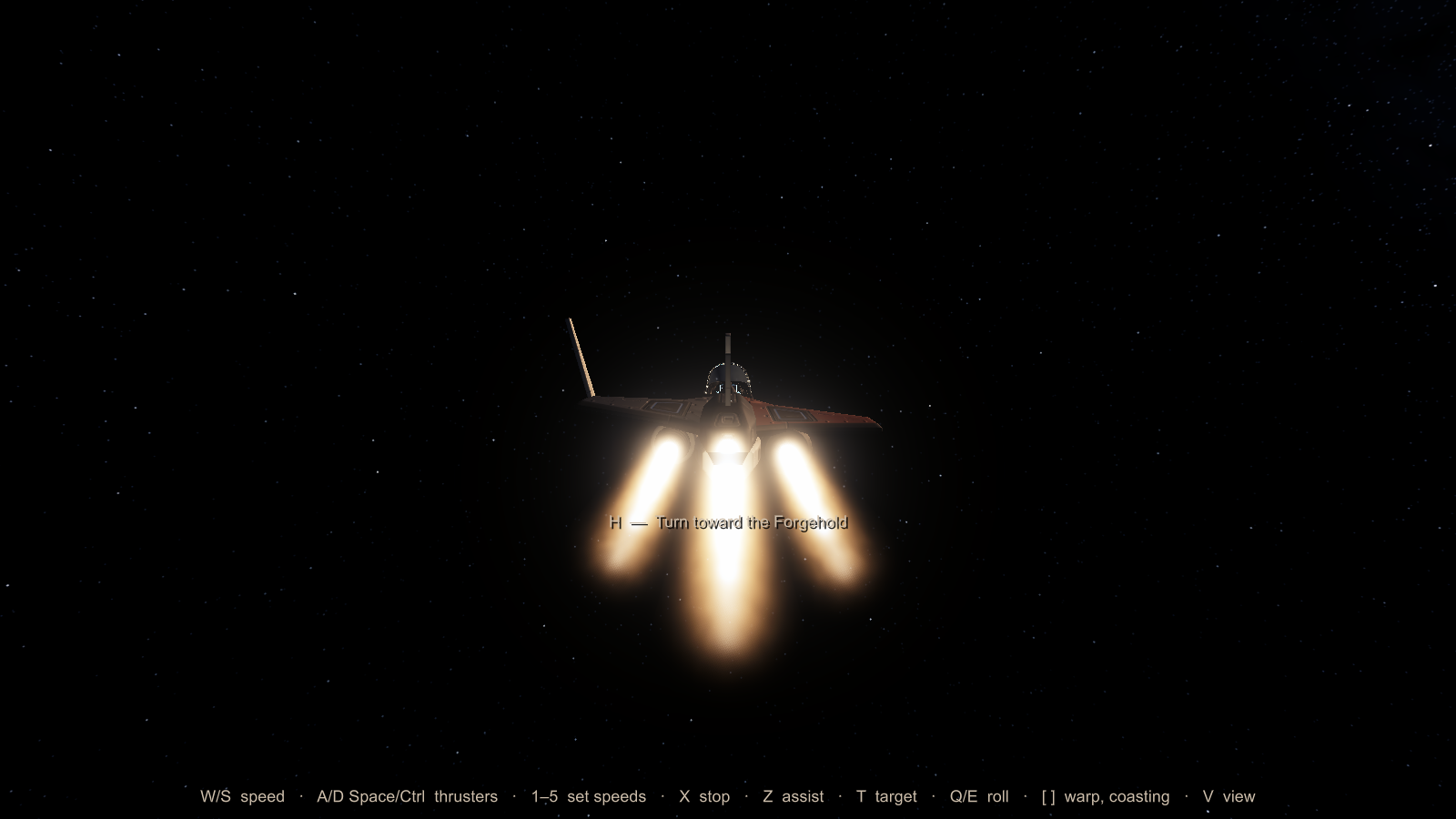
- Flying as spaceflight: momentum, the world's gravity past the gate, a flight assist, the cockpit's screens; the ship's ring turning and its plasma drive
- Coming home without a crash: the assist brakes in time for the Hangar and H takes you home; the ship's drive trails off in a long tail; smooth edges everywhere; one piece of music through the whole ship
- Braking with S: retro ports that fire ahead of her at 3 g, and she holds her speed when you let go
06 Foundations for Play In progress 3/7
- A settings menu on Escape and on the title, and a developer's console on ` whose commands every system brings its own
- A pack to carry iron, rock and ice, and the Vaelin's stores in the Hangar to gather into it
- Play with mouse and keyboard or an Xbox controller: the prompts follow whichever you use, the cursor is free while the pack or a menu is open, and Alt frees it any time
- Drop, discard and pick up again from the pack, and gathering spots that come back
- Quests
- One chat system for everything
- The Wright's own interface: an action bar and inventory that fade when not in use
07 Tending Seeds Planned 0/1
- Every world you speak takes its place, even one that is slipping, and you keep it alive with what you bring back from space and from other worlds
08 Waking Last Lantern Planned 0/2
- A first small quest that teaches the game and ends with repairing Elizabeth so she can fly
- Wake Last Lantern hall by hall: the Forge, the Hangar, then the drive that carries you between worlds, on the trail of Elizabeth's story
09 Together Planned 0/1
- Accounts, private lobbies and worlds shared with friends
10 Worlds You Can Walk Planned 0/1
- Walk on the worlds you build, and on Last Lantern's hull
11 Living Worlds Planned 0/1
- Moons and seasons, and seeding life that changes the world it lives on
12 The Spiral's Story Planned 0/2
- The Observatory's light and the stilled world Rime
- Ruins, Ashvek's missing memory, and what the Long Cold wants
- Begin among the Vaelin (Children of Light), under a red dwarf beside a world the Long Cold has frozen, and follow the story of Elizabeth, the Wright who came before you
- Build a planet in minutes: set its orbit, mass, composition, spin, tilt, air and water
- The physics decides the rest: gravity, temperature, seasons, day length, and whether it can hold an atmosphere or oceans
- Explore what you made, from orbit to the ground with no loading screens
- Uncover an ancient story: why the Anvari vanished, and what the Long Cold wants
An early build: the first milestone, with the Vaelin's Forgehold at final quality:
- Begin from the title and wake aboard Last Lantern, the Vaelin's Forgehold, where its Warden speaks to you; the music follows you from room to room
- Walk the ship as a hooded, cloaked Wright in third person (scroll in for first person): the Cradle, the Observatory, the Forge Chamber and the Hangar. Anvari fields keep you aboard where it stands open to space
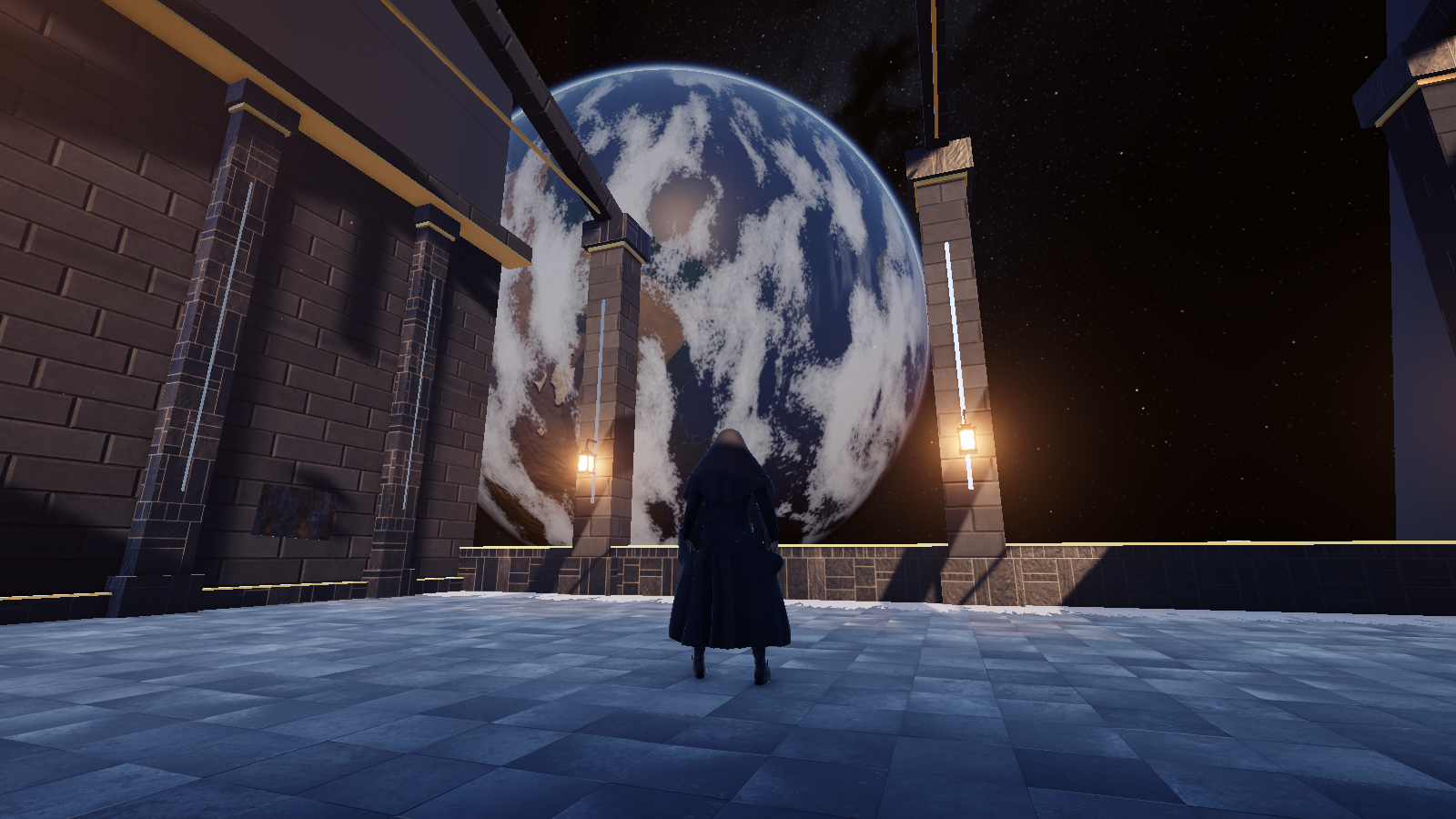
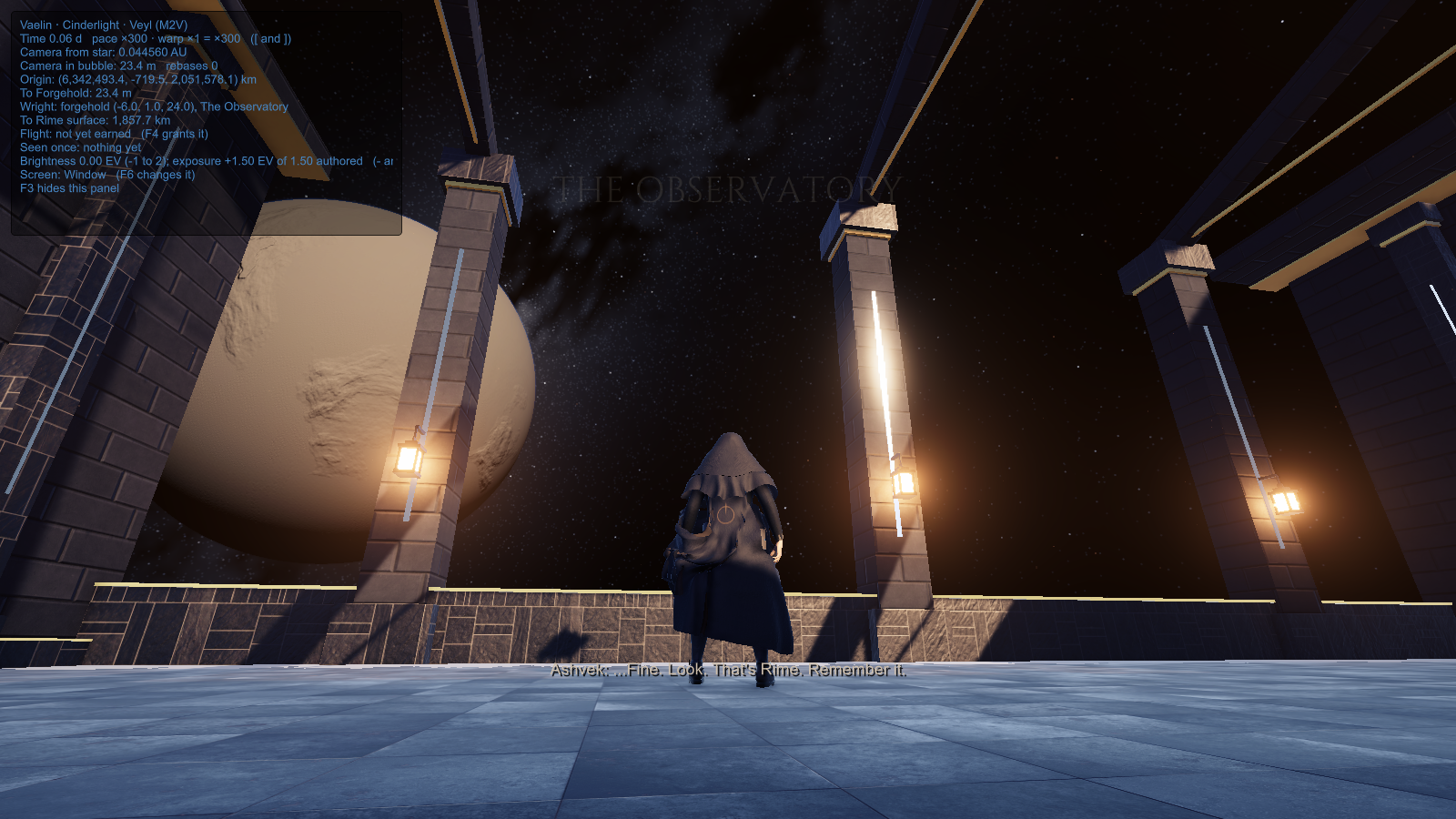
- As the Vaelin, rise from your Cradle in Last Lantern as its damaged Warden, Ashvek, speaks to you: lantern-lit Anvari halls, frost, the hum of the old ship, and the stilled world Rime framed by the Observatory's colonnade under the galaxy's core
- Wear the Vaelin travelling clothes and a cloak marked with the Wright's sign that moves as you run, land, turn and stand in the cold
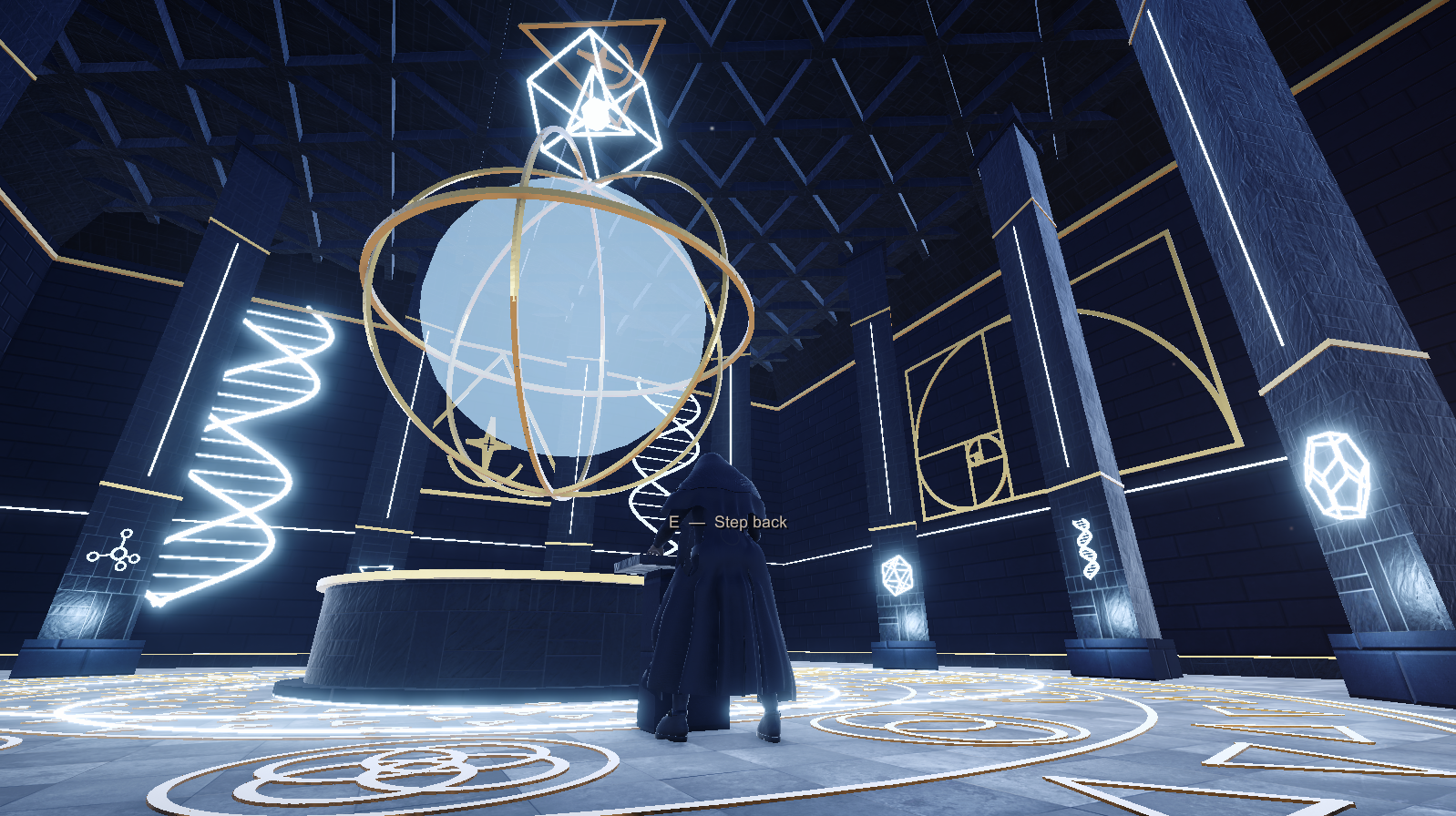
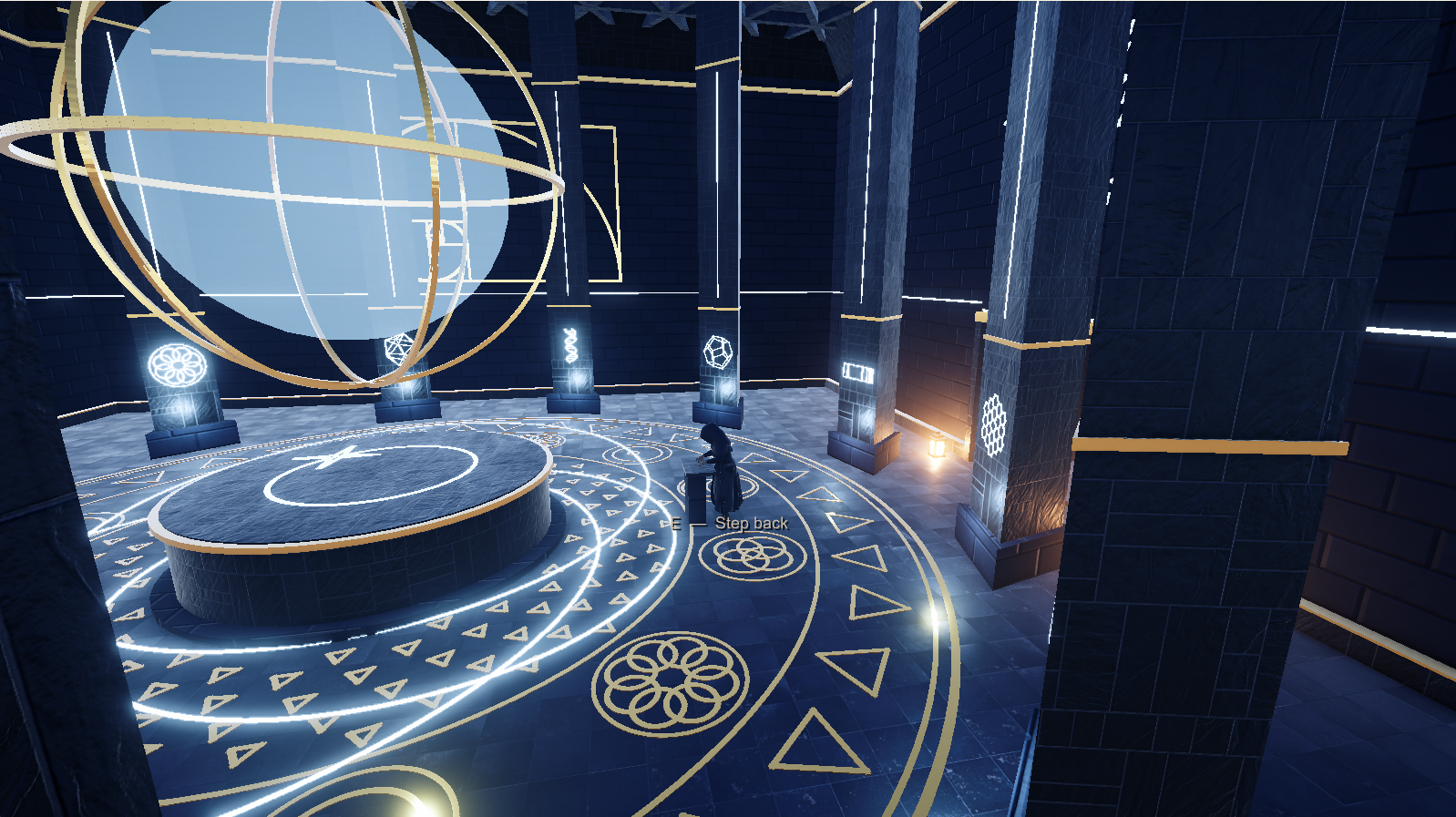
- Walk into the Forge Chamber through a passage where a living cell divides on the walls, and stand in a hall of sacred geometry that is true: a golden rose in the floor, twelve triangular pillars of glowing glyphs, rings turning round the world hologram and the five regular solids nested overhead
- Step up to the Forge's console and write a world: set its distance from the star, its mass, what it is made of, its water and air, its day and its tilt, and watch its gravity, warmth, seas, ice and clouds follow as you turn each dial, with the world itself turning on the hologram above: its continents, seas and ice laid out from its own ground, and its sea rising or drowning the land as you add water. Speak it, and the Forge runs it through its first billion years: it remains, it is slipping, or it is unspoken, with the reasons, and the Warden tells you which
- Walk the Hall of Time to the Forge: its name fades up as you enter, you feel something old calling you onward, and the dividing cells on its walls wake as you pass. Every room names itself as you walk in
- Watch the Forge answer: while the world on the console rhymes, the crown of triangles round the floor, the double helices and your mark glow green. Speak it, and the ship answers: green light runs from the Forge through the halls to the ends of the ship and back in the colour of the verdict, and if the world remains, the crown turns three times
- Then the ship takes you to it. A world you spoke is really out there, on the orbit you gave it, keeping company with the star behind the ship; the Forgehold lets go of its old watch and crosses to it, and when you walk out to the Observatory your world fills the opening with nearly its whole face in the light, and your Warden names it the first time you go and look. A world that is unspoken never lived, so there is nothing to cross to; one that is slipping looks like any other from here
- Watch your world's weather live: storms form, travel and fade, each band of cloud rides its own wind, the ground lies in the cloud's shadow, and lightning flashes in the storms at night; speed up time to see it as a time-lapse from orbit
- Continue your game where you left it, at the star the ship was at, with the worlds you spoke still hanging where you put them; the view comes up as your eyes adjust, with the sky and your world already there
- Ask Ashvek for a turn round your world: the ship falls once round it, and you watch its night side, its storms flashing, and the star go dark behind it, until you are back where you began
- Speak worlds under other stars: after your first world, the Forge offers a fallow star with every seed, an old sun the Anvari prepared and never wrote into, and the ship takes you there as the sky goes out and comes back. The console keeps every world you have spoken, and takes you back to any of them
- Wave: stand still and press 6. Dance: press 7 for a lambada, 8 for a salsa, 9 for a cumbia sonidera of our own
- See your star and its first world from the Observatory, moving on real orbits, and speed up time, under a sky of real stars: the Milky Way rising behind Rime with dark lanes of dust through it, and the stars you have written worlds under shining where they truly are
- Walk into the Hangar under its ribbed vault, up to the great Delta of its mouth, and watch its gate open for you: three leaves of stone, a star of light down their seams, the side leaves folding back and the lowest lowering as a ramp onto the stars. It opens for Elizabeth too, in time however fast she comes home
- As the Vaelin, find Elizabeth, your people's patched ship, on the Delta in the Hangar's floor near their crates and lanterns. Flying her is something you will earn; for now a developer key (F4) grants it. Her name is stencilled on her nose and Dreaming on her tail fin. Fly her out through the field and back, and the Hangar takes hold of her and sets her down, where she rests powered down until you hold R to wake her. Sit in her cockpit, a pod grafted on from another ship, and hold the right mouse button to look round it. Then fly thousands of kilometres into space and come home
- Fly Elizabeth as a spacecraft (once flight is granted): she keeps her momentum, takes time to stop and turn, and out past the gate she starts to fall toward the world. Her flight assist holds a set speed relative to the ship or the world, her cockpit screens read your speed, your path round the world and the clock, and her four drives burn with plasma behind her. Press H and she takes you home, braking in time so the Hangar can catch her; her screen shows how far home is and how far she needs to stop. Hold S to brake: her retro ports fire ahead of her, and when you let go she keeps the speed she has
- Watch Last Lantern from outside: its great ring turning, and the plasma drive burning from the heart of its underside
- Gather what the Vaelin left: along the Hangar's west wall, salvaged iron, a frozen water cask and a sack of ballast rock go into your pack with E (up to 40 kg); press I to see what you carry
- Play with an Xbox controller or the mouse and keyboard, switching whenever you like: the prompts name the buttons of whichever you last used, and a controller works the menus by moving a highlight. The cursor is free while the pack or a menu is open (you can still walk with the pack open), and holding Alt frees it any time
- Press Escape for the settings menu (brightness, screen mode, smoothing, the pace of time), also on the title; developers press ` for a console of commands (type help)
What's next
Session #60 set a new direction: the worlds you speak need tending, with resources you gather from space and from other worlds, and Last Lantern itself becomes the first place to explore and wake. The plan, in order:
- Foundations: a developer console, a settings menu, a pack to gather into and play with a controller as well as the mouse and keyboard (done), then dropping and discarding from the pack, quests, one chat system, and the Wright's own interface (an action bar and inventory that fade when not in use)
- Tending worlds: every world you speak takes its place, even one that is slipping, and you keep it alive by bringing back what other worlds and space can give
- The ship and the story: wake Last Lantern hall by hall (the Forge, the Hangar, Elizabeth, then the drive that carries you between worlds), and follow Elizabeth toward the world she went down to
- Playing together: accounts, private lobbies and shared worlds
- Alongside: the Observatory's light and the stilled world Rime, walks on the hull, and landing on the worlds you make
- Unity 6.6 (Universal Render Pipeline), C#
- An engine-free C# simulation core with its own unit tests
- Windows PC
Features
- Play with an Xbox controller as well as the mouse and keyboard, on foot, in Elizabeth and on every screen; the game follows whichever you last used, and the prompts name its keys or buttons
- The cursor is free while the pack, the Forge or a menu is open, and you can walk with the pack open; hold Alt to free it any time
Fixes
- Brightness and the pace of time no longer creep down to their lowest as you walk after using the settings menu
- E now only takes and uses things on foot and only rolls Elizabeth at her controls, never both
Technical Improvements
- Every control now lives in one Input System actions file with a keyboard-and-mouse and a controller layout, so a key or button is set in one place
Features
- A pack: a Wright carries iron, rock and ice, up to 40 kg; I shows what is carried and what it weighs, and a line says what came in
- Three stores the Vaelin left along the Hangar's west wall (salvaged iron, a frozen water cask, ballast rock): E takes each into the pack, and taken they are gone for good
Enhancements
- The developer's console can show the pack and fill or empty it (pack, give, take), and put back what was gathered (restock)
Technical Improvements
- Your save keeps what you carry and what you have gathered, so a continued game opens with the same pack and the stores you took stay gone; something that would not fit is never half taken
Features
- A developer's console on ` (the key left of 1): type help for its commands, among them warp, time, settings, set, reset, grant, forget, progress and panel. Enter runs a line, the arrows recall earlier ones, Tab completes a name; while it is open, typing never moves the Wright
- A settings menu on Escape, and from a new Settings button on the title: brightness, screen mode, anti-aliasing and the pace of time, each changed and saved as you go
Enhancements
- The developer panel's keys (F3 to F6, - = 0) are console commands now, and what they do shows in the console's log
- Escape opens the settings menu rather than only freeing the cursor; it still steps back from the Forge and skips cutscenes first
On the source. This page mirrors a private repository. The milestones, changelog and narrative come from the project's own README and CHANGELOG, and the statistics are read live from the GitHub API, so it reflects the state of the work rather than a summary written after the fact. No source code is published here.